


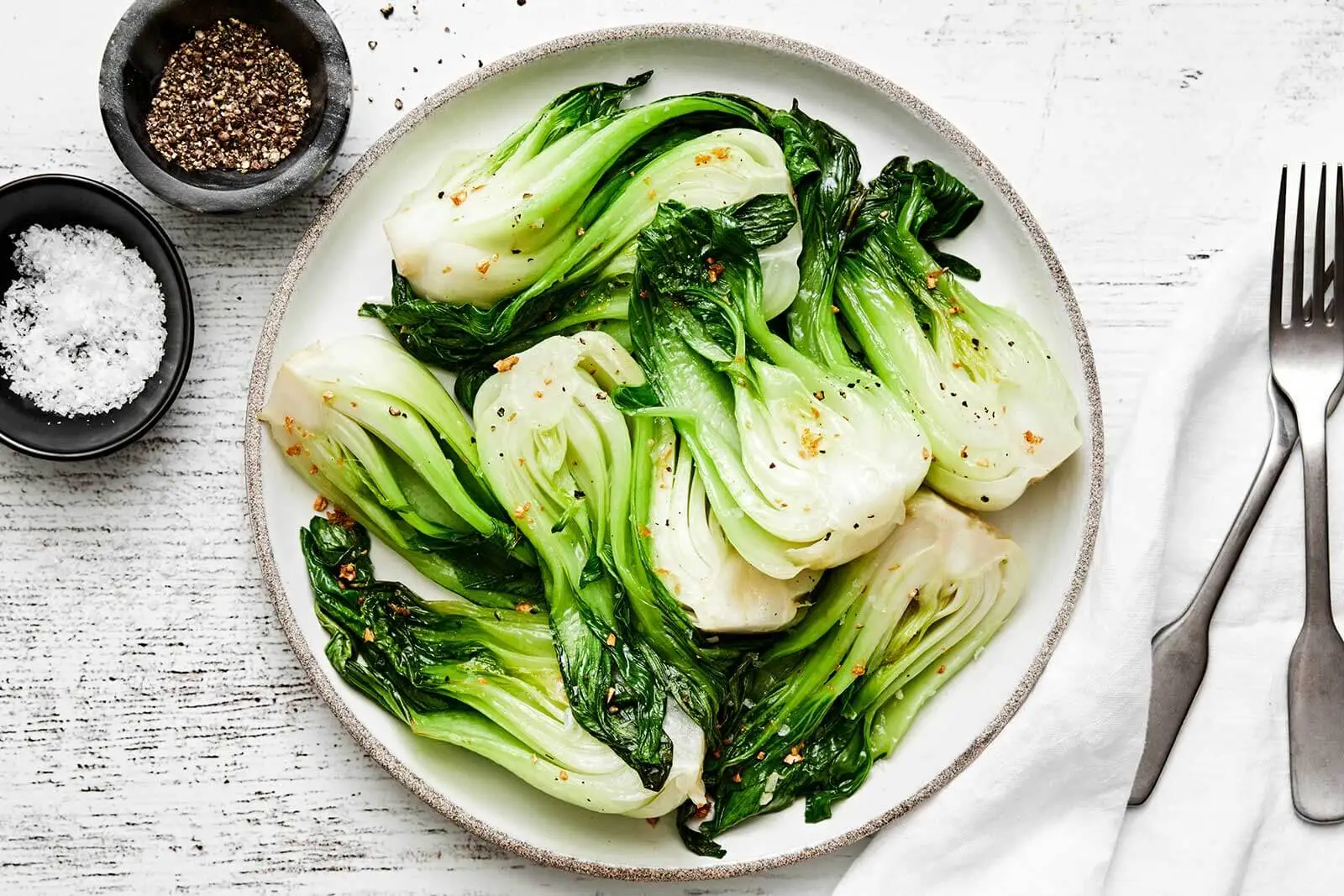
Bok choy is a versatile Asian green that can transform any meal with its crisp stems and tender leaves. Known for its mild, slightly mustardy taste, this vegetable can be stir-fried, steamed, roasted, or enjoyed raw. Whether you’re a beginner or a seasoned cook, bok choy is simple, healthy, and delicious.
Also called pak choi, Chinese cabbage, or pac choi, bok choy belongs to the mustard family. It’s related to vegetables like kale, broccoli rabe, and turnips. Bok choy comes in various sizes and colors—from small baby heads to large mature stalks, and even green or purple leaves. Baby bok choy is tender and perfect for quick cooking, while mature bok choy is ideal for soups and stir-fries.
When shopping for bok choy:
Look for crisp, green leaves and firm stems.
Avoid heads with yellowing or wilted leaves.
For raw dishes, small baby bok choy is preferred; for cooked dishes, size matters less.
Keep in a plastic bag with a dry towel in the refrigerator.
Alternatively, use a sealed glass container with a paper towel to absorb moisture.
Consume within 3–5 days for optimal freshness.

Bok choy is packed with vitamins A, C, and K, calcium, magnesium, and folate. It also contains fiber and antioxidants that support digestion and fight inflammation.
Calcium, magnesium, zinc, and vitamin K in bok choy help maintain strong bones and joints. These minerals aid collagen synthesis, reducing the risk of osteoporosis.
Potassium, magnesium, and calcium help regulate blood pressure, while folate and vitamin B6 may reduce harmful homocysteine levels, lowering the risk of heart disease and stroke.
Bok choy contains glucosinolates and selenium, compounds studied for their potential anticancer effects. These nutrients may help protect cells from damage and support overall wellness.
Different Varieties of Bok Choy
Baby Bok Choy – Tender, small heads, ideal for quick stir-frying.
Shanghai Bok Choy – Larger, light green stems with mild flavor.
Regular Bok Choy – Robust stems, suitable for soups and braising.
Bok choy cooks quickly, and it’s best to avoid overcooking. Here’s how to prepare it:
Wash thoroughly – Separate leaves and rinse between the stems.
Cut – Halve or quarter baby bok choy; chop larger heads into stems and leaves.
Sauté – Heat oil in a pan, add garlic and ginger, then the bok choy stems first, followed by the leaves.
Steam briefly – Add a splash of water, cover, and cook for 30–45 seconds.
Add sauce – Soy sauce, sesame oil, and a touch of honey or mirin create a flavorful glaze.
Stir-Fry – Quick, high-heat cooking keeps stems crisp.
Steaming – Preserves nutrients and natural sweetness.
Grilling – Adds smoky flavor to tender greens.
Roasting – Slight caramelization enhances taste.
Raw – Perfect in salads, sandwiches, and wraps.
Garlic Sautéed Bok Choy – A quick side dish with garlic and sesame oil.
Bok Choy with Ginger Sauce – Pan-seared greens in a savory, slightly sweet sauce.
Bok Choy Soup – Add noodles, tofu, and broth for a comforting meal.
Stir-Fried Bok Choy with Vegetables – Mix with carrots, bell peppers, and water chestnuts for a colorful stir-fry.
Bok choy is low in calories but high in fiber, vitamins, and minerals. It supports digestion, heart health, and bone strength while providing antioxidants to combat oxidative stress.
Chop and sauté as a side dish.
Add to soups or noodle bowls.
Roast with olive oil for a simple dinner.
Mix into salads or grain bowls.
Include in stir-fries with your favorite proteins like tofu, chicken, or shrimp.
Bok choy is a super versatile, nutrient-packed vegetable that’s perfect for quick, healthy meals. Whether you sauté, steam, roast, or eat it raw, it adds flavor, crunch, and essential nutrients to your diet. Make bok choy a regular part of your kitchen and enjoy its many health benefits and delicious taste.