


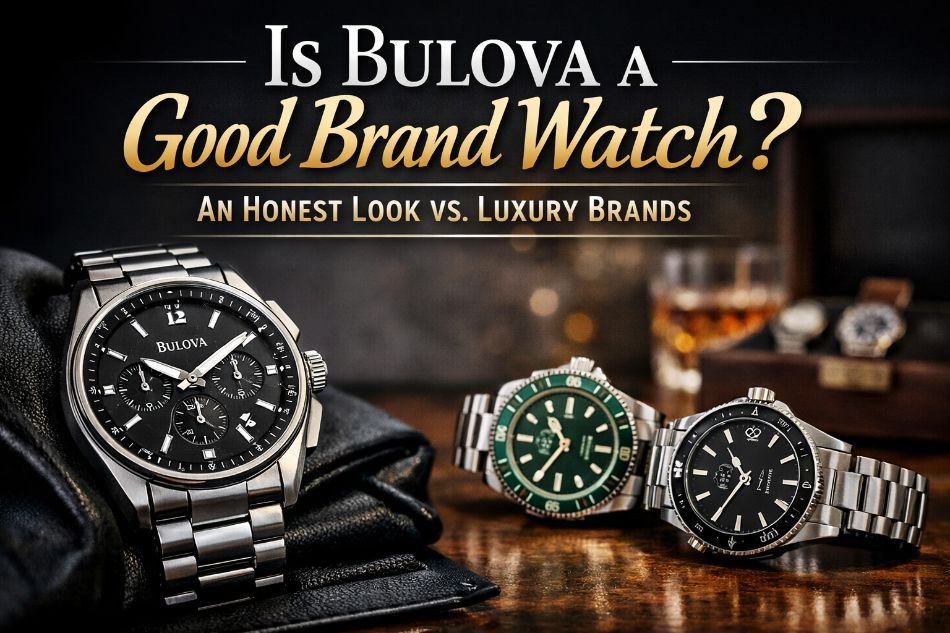
Imagine you’re shopping for a special watch. You want something that feels substantial, looks great, and doesn’t require a second mortgage. As you browse, you keep seeing the name Bulova. Maybe your grandfather had one. You see their sleek designs and hear about their history, but you’re not sure where they fit. Are they a true luxury brand like Rolex or Omega? Or are they something else entirely? This is the exact puzzle we’re going to solve today.
The straightforward answer to “Is Bulova a good brand watch?” is yes, it absolutely is a good brand. But the real question is: good for what, and good for whom? To understand that, we need to compare it to the world of luxury watches. Let’s pull up a chair and look at the details.
First, let’s clear the air. “Luxury” in watches is a big, fuzzy term. We can think of it in tiers:
Ultra-Luxury & High-Horology: Think Patek Philippe, Audemars Piguet. These are heirlooms, art pieces, and investments often costing as much as a car or house.
Established Luxury: This is where Rolex, Omega, and Breitling live. They are globally recognized symbols of status, with incredible engineering, history, and strong resale value.
Accessible / Entry-Level Luxury: Brands like TAG Heuer, Longines, and Oris. They offer Swiss heritage and premium materials at a more reachable price point (often $1,000 – $3,000).
Premium Heritage Brands: This is Bulova’s neighborhood. They have a rich history, innovative technology, and offer exceptional quality for their price, which is typically between $200 and $1,000.
Knowing this helps us see that comparing Bulova to a Rolex is like comparing a beautifully crafted, reliable sedan to a hand-built supercar. Both are good, but they serve different purposes and budgets.
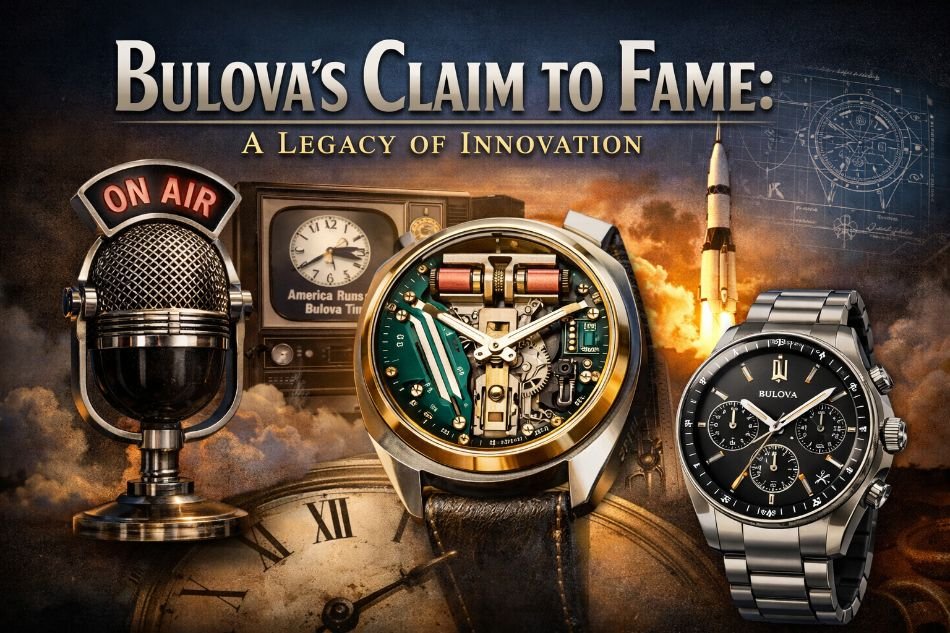
To see if is Bulova a good watch brand, we must start with its story. Founded in 1875, Bulova is older than many Swiss brands. They’ve been pioneers:
In 1919, they made the first full line of men’s wristwatches.
In 1927, they sponsored Charles Lindbergh’s transatlantic flight.
Their legendary “Accutron” watches from 1960 used a tuning fork movement (with a distinctive hum) instead of a balance wheel. This was so accurate that it became the NASA standard and even went to the moon on the Apollo missions.
This isn’t just old news. That innovative spirit lives on in their Precisionist movement, known for its incredibly smooth second-hand sweep, and their UHF (Ultra High Frequency) quartz movements, which are accurate to within 10 seconds a year. For the price, this level of timekeeping tech is hard to beat.
Let’s put Bulova in a ring with some common watch types.
Bulova vs. Fashion Watches (like Fossil, Michael Kors)
This is where Bulova shines. While fashion watches buy movements (the watch’s engine) from other companies and focus on style, Bulova designs and engineers its own movements, especially its high-accuracy quartz movements. The build quality, materials (like stainless steel cases and mineral or sapphire crystals), and lasting power of a Bulova are typically far superior. You’re paying for watchmaking, not just a name on a dial.
Bulova vs. Entry-Level Swiss Luxury (like Tissot, Hamilton)
This is the most interesting match. Brands like Tissot are fantastic, offering a Swiss-made pedigree. The competition is tight.
Movement: Tissot often uses Swiss automatic (self-winding) or quartz movements. Bulova uses its own high-tech quartz or Miyota (Japanese) automatics. Swiss has a romance factor, but Bulova’s tech specs are outstanding.
Design & Finish: Both offer excellent finish for the price. Bulova often leans into bolder, American-inspired designs, while Swiss brands may have a more traditional feel.
Price: Bulova often undercuts these brands slightly, offering similar or better features for less money. A Bulova with a sapphire crystal (highly scratch-resistant) is a tremendous value.
Bulova vs. Established Luxury (like Rolex, Omega)
This isn’t a fair fight, and that’s okay. A Rolex Submariner is a masterpiece of engineering, status, and investment. It’s made almost entirely in-house, designed to last a lifetime with minimal service, and holds its value. A Bulova Marine Star diver’s watch can look the part and function superbly for swimming, but it won’t have the same heft, prestige, or resale value. This comparison isn’t about which is “better,” but about understanding what you’re paying for: ultimate luxury versus exceptional practicality.
Pros:
Outstanding Value: You get a lot of watch for your money. Advanced technology (like Precisionist), good materials, and solid construction are standard.
Rich Heritage: You’re wearing a piece of American history with genuine innovations.
Design Variety: From the classic Frank Lloyd Wright and Sutton collections to the rugged Archive Series re-issues, there’s a style for everyone.
Low Maintenance: Their quartz movements are incredibly accurate and may only need a battery change every 2-3 years.
Cons:
Not a “Status Symbol”: It won’t turn heads in a boardroom the way a Rolex or Omega might.
Resale Value: Bulova watches depreciate, like most cars. Don’t buy one as an investment.
Perception: Some watch snobs may dismiss it for not being Swiss-made, overlooking its unique history and technology.
So, after all this, who should buy a Bulova? It’s an excellent choice if you:
Want a high-quality, reliable watch without spending thousands?
Appreciate history and innovation, but don’t need Swiss branding.
Desire a versatile collection—you can own a dress watch, a sport watch, and a casual watch for the price of one entry-level luxury piece.
Are a beginner entering the world of nicer watches and want a fantastic starting point.
Let’s return to our main question: Is Bulova a good brandof watchesh? The evidence says yes. It is a respected, historic brand that makes excellent watches. The better question to ask yourself is: “What do I want from a watch?”
If you want a symbol of ultimate prestige and are building an heirloom, save for an established luxury brand. But if you want a beautifully made, accurate, and stylish timepiece that represents one of the best values in watchmaking today, then Bulova is not just good—it’s a brilliant choice.
It’s the watch for people who understand substance, who appreciate a smooth-sweeping second hand on a Precisionist model, and who wear their history on their sleeve—literally. In the world of watches, Bulova confidently occupies its own valuable space, offering a slice of luxury that feels both special and smart.
Is Bulova considered a luxury watch?
Bulova is considered a “premium” or “heritage” brand rather than a true luxury brand. It offers luxury-adjacent quality, history, and innovation at a more accessible price point.
Are Bulova watches good for everyday wear?
Absolutely. Their durability, accuracy, and range of styles make them ideal daily companions.
Where are Bulova watches made?
Bulova is an American brand, but its watches are assembled using components from various countries, including Japan (movements) and China. Their high-end “American Engineer” line is built in the USA.